Health and Safety Policy — House Clearance Hitchin
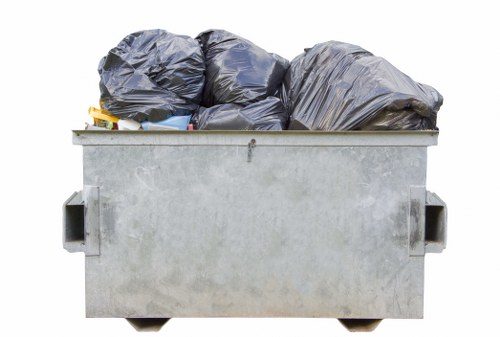 House Clearance Hitchin is committed to maintaining the highest standards of health and safety for all employees, contractors, clients and the public while delivering professional house clearance and rubbish removal services. This policy sets out our approach to risk management, safe systems of work and responsibilities within our waste clearance and domestic clearance operations across the service area. The aim is to prevent injury, ill health and environmental harm while ensuring efficient rubbish collection and property clearance.
Our company recognises that hazards arise from a range of activities common to house clearance and waste disposal: manual handling of bulky items, handling of sharp or hazardous materials, working in confined spaces such as lofts or cellars, operation of vehicles and plant, and the movement of waste to and from properties. All staff and operatives receive training and supervision to manage these risks and to ensure rubbish removal in Hitchin and surrounding areas is carried out safely and legally.
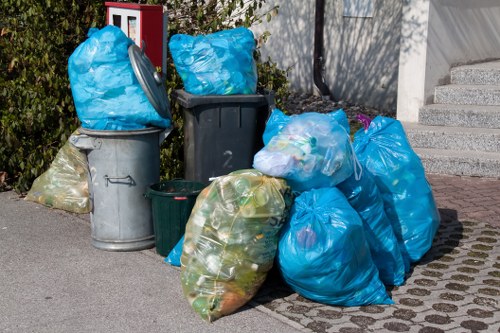 Responsibilities: senior management is accountable for overall health and safety strategy and resource allocation. Line managers are responsible for implementing safe systems, conducting risk assessments and ensuring compliance. Operatives must follow safe working methods, use provided personal protective equipment (PPE) and report hazards or incidents immediately. Clients and site owners are asked to provide accurate information about site conditions and potential hazards before any house clearance service is undertaken.
Risk Assessment and Safe Systems of Work
Before starting any waste clearance or house clearance service, a documented risk assessment will be carried out. This considers manual handling risks, hazardous substances (including asbestos, chemicals and sharps), vehicle movements, traffic management and environmental risks such as soil or water contamination. Control measures are implemented in line with the hierarchy of controls: eliminate, substitute, engineer, administrate and use PPE where appropriate.
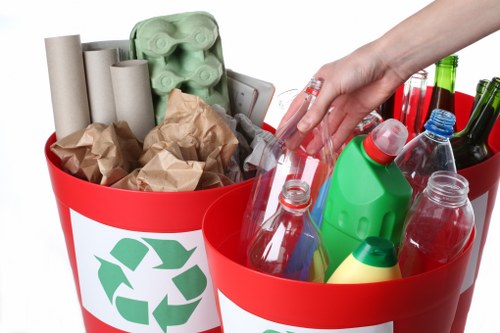 Safe working procedures are provided for common tasks including heavy lifting, dismantling furniture, handling electrical items and segregating recyclables. Operatives are trained in safe manual handling techniques and the correct use of lifting equipment. Where specialist removal or disposal is required, we will engage suitably qualified contractors to manage hazardous waste in compliance with applicable waste management requirements.
Emergency arrangements are in place for incidents such as accidents, dangerous material discovery, fire or vehicle collisions. First-aid provisions and incident reporting procedures are maintained. All accidents and near-misses are investigated to identify root causes and to prevent recurrence. Fire safety and safe vehicle operation are reinforced through regular briefings and checks.
Training, PPE and Occupational Health
We provide ongoing training for operatives and supervisory staff covering safe handling of waste, manual handling competency, use of lifting aids, awareness of hazardous materials and safe vehicle loading. Personal protective equipment such as gloves, safety boots, high-visibility clothing and eye protection are supplied and must be worn for relevant tasks. Health surveillance is available where tasks present occupational health risks.
To maintain safety standards across rubbish collection and domestic clearance assignments, the organisation enforces regular vehicle and equipment maintenance schedules, toolbox talks and competency checks. A safety culture is promoted where employees are encouraged to halt work if they consider a situation unsafe and to consult supervisors for guidance.
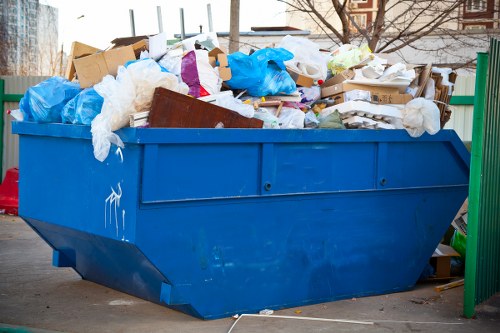
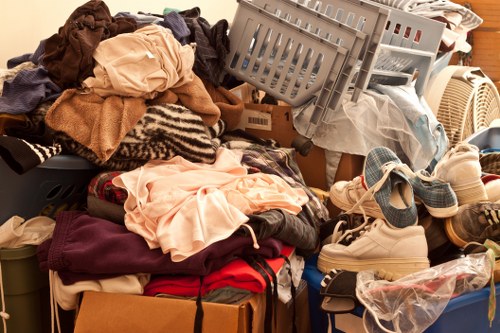 Waste segregation and environmental controls: correct classification and segregation of waste streams reduces environmental impact and legal risk. Recyclables are separated from general waste, and items requiring special handling—such as electronic waste, chemicals or batteries—are clearly identified and processed through approved channels. Spill kits, containment measures and vehicle load security protocols are used to protect public spaces during rubbish removal operations.
 Monitoring, review and continual improvement: the health and safety policy is regularly reviewed to reflect operational changes, legislative updates and lessons from incident investigations. Performance is monitored using site inspections, audit findings and key performance indicators related to accident rates, training completion and compliance with waste handling procedures. Management commits to providing the necessary resources to implement improvements.
Key elements of our policy include:
- Clear roles and responsibilities for health and safety across the organisation, ensuring accountability for safe house clearance and rubbish removal operations.
- Comprehensive risk assessment for each job, tailored to the specifics of each property and the waste types encountered.
- Appropriate training and supervision to ensure operatives can carry out house clearance services safely and efficiently.
- Provision and enforcement of PPE for all relevant tasks and environments.
- Robust emergency procedures, incident reporting and investigation to learn and improve.
All personnel, contractors and stakeholders involved in waste clearance, rubbish collection or domestic clearance activities are expected to support and comply with this policy. By working together and following these standards, House Clearance Hitchin and its team aim to deliver safe, reliable and environmentally responsible rubbish and waste clearance services across the service area. This policy is available to staff and stakeholders on request and will be updated periodically to ensure ongoing relevance and effectiveness.
